Chemical & Physical Peptide Evaluation
Peptide Quality Assurance & Pureness Testing Boc Sciences
In vivo examinations review absorption, circulation, metabolic process, and excretion (ADME) attributes, further confirming efficiency and security. These testing services not only assist clients maximize items exactly during growth yet additionally give solid information support for regulative conformity of peptide formulations. Beware of COAs that offer a purity number with no sustaining chromatographic information, report purity without defining the analytical method, or checklist a molecular weight without mass spectrometry confirmation. Tandem mass spectrometry (MS/MS or MS TWO) fragments the peptide ions in the gas stage and analyses the piece masses. This is the gold standard for peptide identification-- it verifies both the structure and the series. For several peptide tasks, absolute peptide amount matters as long as chromatographic pureness.- These analyses are useful when clients require greater than a mass range and chromatogram to judge whether a lot is truly suitabled for measurable work.
- Beware of laboratories that do not make use of mass spectrometry together with HPLC, as this might miss essential identity details.
- It divides the parts of an example based upon their differential affinity for a stationary stage (column packaging material) and a mobile stage (solvent system relocating with the column).
- Enhancing HPLC, research laboratories make use of Mass Spectrometry (commonly combined as LC-MS) to confirm the peptide's molecular weight and series identification.
- Due to the fact that peptides are produced through complicated chemical processes, trace pollutants can create naturally.
What The Impurities Really Are
Irregular fragment dimension distribution and morphology can influence bioavailability and security. BOC Sciences is outfitted with instruments like DLS, TEM, SEM, and so on, to totally analyze nanoparticle size, circulation, and microstructure. For us, pureness isn't just a portion-- it's a guarantee of stability, consistency, and regard for the scientific research being done.
The most stringent grade, involving mindful HPLC purification-- sometimes several rounds-- and rigorous QC. Needed for measurable researches, structural biology, in vivo study designs, and any type of application where even percentages of contamination can impact outcomes. This is the grade where the boost most greatly, due to the fact that achieving that last 1-- 3% of purity calls for disposing of a considerable fraction of the manufactured product. A removal peptide missing out on a solitary deposit might still bind to the very same receptor, however with various affinity or selectivity. In concentration-response experiments, these pollutants can change curves, flatten plateaus, or present biphasic habits that covers real activity of the target substance. The isoelectric factor (masterpiece) is a crucial specification for recognizing peptide solubility and actions in numerous atmospheres.Certifications Of Evaluation: Just How To Check Out And Translate Laboratory Reports
These can be especially problematic since their chromatographic behavior is really comparable to the target peptide, making them more difficult to separate during filtration. When a peptide is 98% pure, that staying 2% isn't arbitrary sound-- it specifies, recognizable sorts of results. Mass spectrometry measures the molecular weight of a Look at this website compound with severe precision. For peptides, the most common strategies are electrospray ionization (ESI-MS) and matrix-assisted laser desorption/ionization time-of-flight (MALDI-TOF). HPLC separates a combination into its private parts based upon exactly how each particle connects with a specifically made column. 
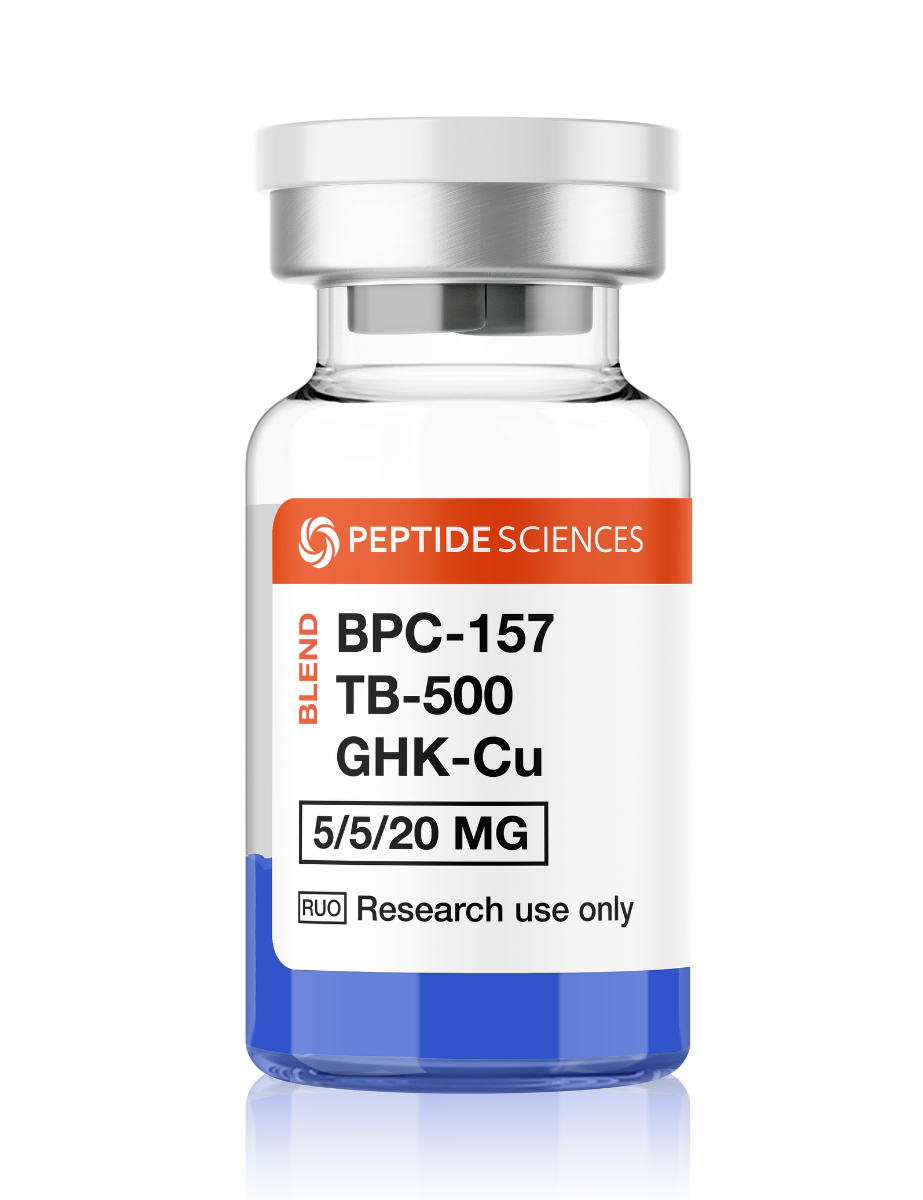
This level of extensive analysis guarantees the peptide's precision-- implying the series and purity are specifically as labeled-- which is critical for experimental reproducibility. By verifying make-up with numerous validated techniques, laboratory validation guarantees that scientists get a high-purity peptide that will execute as expected in the laboratory. Lab recognition of peptides is not only a scientific ideal method-- it's typically a governing requirement when peptides are made use of in therapeutic growth or clinical study.
A practical assay determining downstream signaling-- or a structural study using NMR or X-ray crystallography-- demands the highest possible purity readily available. Crystallographers specifically often call for ≥ 98% pureness due to the fact that also small contaminants can avoid crystal development or present problem into the crystal latticework. As molecules leave the column, they pass through a detector-- commonly a UV detector readied to 214 or 220 nm, wavelengths where the peptide bond soaks up light strongly. The detector records how much UV light is soaked up gradually, generating a graph called a chromatogram. This guide breaks down what pureness actually suggests in peptide chemistry, how it's determined, what the contaminations are, and just how to read the paperwork that shows a peptide is what it asserts to be. Along with HPLC and MS, specialized labs may utilize orthogonal techniques for included precision. As an example, capillary electrophoresis can be utilized to divide really hydrophilic peptides or to double-check results, and MALDI-TOF mass spectrometry can aid in mapping larger or customized peptides. Lots of peptide manufacturers or suppliers will offer a COA (Certification of Analysis), as an example our bpc 157 tb 500 mix, that consists of the purity percent by HPLC and identity confirmation by MS for each set. Top-tier laboratories usually https://godiedyvwbtotuh.bandcamp.com/ report peptide purity well above 95%, frequently ≥ 98-99%, by using cutting edge HPLC and MS evaluations. They likewise evaluate both resources and finished peptide vials, which aids capture any type of impurities, destruction items, or formulation inconsistencies.